
Seeking Justice: A Guide to Criminal Appeals for Women
April 2026
Seeking Justice: A Guide to Criminal Appeals for Women, is the result of research, collaboration and most importantly, direct engagement with women who have lived through the criminal appeals process themselves.
We were privileged to be able to talk to women with experience of the criminal justice system. We listened to what women told us they needed: clear, accurate information about criminal appeals and the Criminal Cases Review Commission (CCRC), presented in a way that is accessible, trauma‑informed and realistic about the barriers they may face along the way.
APPEAL worked in partnership with Dr Lucy Welsh (University of Sussex), assisted by the pro bono lawyers at Reed Smith, whose vital support helped make this project possible. We are also very grateful to Dr Laura Janes KC (Hon) and Emma Goodall KC, whose contributions proved invaluable in developing the guide.
Specialist Support
APPEAL recognises that navigating the criminal appeals system in England and Wales is extraordinarily difficult, particularly for people without access to specialist legal advice.
For women who have been wrongfully convicted, those difficulties are often compounded by isolation, trauma, caring responsibilities, and a criminal justice system that was never designed with their experiences in mind.
APPEAL has been examining these issues for several years. Earlier research in collaboration with The Griffins Society, Righting Wrongs, explored the experiences of women maintaining innocence within a system designed by men with a clear lack of gendered information and support.
In-depth research of lived experience of the criminal justice system
We worked alongside, Dr Lucy Welsh who has extensive practical and academic experience of the criminal appeals process. Her first of a kind research into applicant experiences of the CCRC looked in depth at difficulties faced by people maintaining innocence following a conviction. The findings were stark: many people fighting to clear their names felt isolated and let down by the delays in the appeal process, not to mention the difficulty accessing specialist legal help.
Worryingly, more than 35% of participants to the research reported either giving or receiving help around appeals or CCRC applications from peers, often other prisoners maintaining innocence. This support took many forms: explaining forms, sharing templates, talking through deadlines, or offering emotional reassurance during an intimidating and isolating process.
However, the research also revealed significant risks. Just under half of those who said they had provided peer support demonstrated misunderstandings, gaps or inaccuracies in their understanding of the law or appeal processes. People were learning, teaching and supporting each other in good faith, but without access to reliable, accessible information, there was a real danger of errors being repeated and compounded.
Many participants described struggling to find trustworthy resources that explained the appeals system in clear, plain language. The message was consistent; people wanted to understand the system, but the information available to them were scarce and inadequate.
The research also raised an important and concerning gendered dimension. Women appeared more likely than men to express doubts about their ability to appeal successfully or engage with the legal process at all. Confidence, access to information and feelings of legitimacy all seemed to shape how women experienced post‑conviction processes and whether they felt able to pursue them.
Barriers to access to justice
As APPEAL’s Co‑Director Emma Torr wrote in Counsel Magazine: A System in Crisis: The Voices of the Silent; the progressive shrinking of criminal legal aid has left many people wrongly convicted or wrongly sentenced effectively navigating post‑conviction processes alone.
Many solicitors’ firms simply can’t afford to undertake publicly funded appeal work as the funding rates are abysmally low. Presently, nearly half of all applications to the Court of Appeal are by Litigants in Person. Access to a lawyer for applications to the CCRC is far worse, around 95% of people applying have no legal representation. Yet these are often the most complex and challenging cases to manage.
Despite APPEAL’s work in campaigning to improve access to justice. We remain deeply concerned that without specialist legal advice miscarriages of justice will go uncorrected.
Listening to Women
To explore these issues in more depth, a series of focus groups were held with women maintaining innocence, both in prison and in the community. The aim - to understand what women knew about the appeals process, what were the knowledge gaps and what information women wanted and in what form.
The focus groups were powerful and emotional. Women shared personal experiences of confusion, frustration, exhaustion and despair, but also of resilience, solidarity and mutual support. Many spoke about how lonely the appeals process felt, particularly when legal advice was unavailable or inconsistent. Others described the emotional toll of revisiting traumatic experiences while trying to meet unforgiving deadlines and procedural rules.
Across all of the groups, one theme emerged repeatedly: the need for clear and accurate information so informed choices could be made. Women wanted explanations that did not assume legal knowledge, practical tools such as charts, checklists and templates, and guidance that was realistic about just how difficult the process can be and how long it might take.
Women told us:
“There’s no information available.”
“Once you’re in prison, you’re on your own.”
“You’re meant to keep your head down, not make a fuss.”
And one woman put it painfully simply:
“No weapons, no armour.”
In other words — no information, no tools, no power.
What This Guide is for
Seeking Justice has been developed to provide clear, accurate and trauma‑informed information about:
- The criminal appeal process and the different routes depending on where the case started
- Time limits, “fresh evidence” and key decision points
- How the Court of Appeal and the CCRC work and the procedure to apply
- Where to find legal support, and what other support organisations can offer
The guide is deliberately designed to be a useful reference tool that can be used when needed. It does not need to be read from cover to cover. Readers can start wherever feels manageable, return to sections later, and share it with others. Informing the reader with information that is accurate, transparent and grounded in women’s lived experience.
We hope that this guide can make the process of appealing a little less opaque, a little less isolating, and a little more humane.
APPEAL will continue to campaign for a fairer and more equitable legal system.
Seeking Justice: A guide to criminal appeals for women, was developed in collaboration with:

If you are an organisation who would like to supply hard copies of this guide to clients, please send a message to: mail@appeal.org.uk.
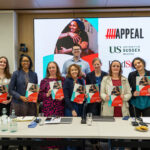
Gallery - Launch Event 23rd April 2026
photo credit: Andy Aitchison








Read More >>>

BBI Retreat 2026
Bound by Injustice (BBI) Retreat 2026 August Bank Holiday Retreat – A Weekend of Connection, Rest and Resilience Over the…

We’re Hiring – Barrister/Solicitor
We’re Hiring Barrister/Solicitor Barrister/Solicitor – £52,000 to £60,000 pa. APPEAL is legal charity that represents the wrongly convicted and campaigns…

Media Enquiries
Subscribe to Newsletter
Get Legal Help
Complaints Policy
Privacy and Cookie Policy
72-75 Red Lion Street (6th Floor)
London, WC1R 4NA
07735 434268
mail@appeal.org.uk
APPEAL is the working name of the Centre for Criminal Appeals, a Charitable Company Limited By Guarantee and a law practice authorised and regulated by the Solicitors Regulation Authority.
Registered Charity Number: 1144162 | SRA Authorisation Number: 621184 | Company Number: 07556168