
Eddie Gilfoyle
Failed by the criminal justice process at every stage

“18 years is a long time in prison if you are guilty. If you are innocent like Eddie, it is an eternity.”
— Sue Caddick, Sister of Eddie Gilfoyle (2012)
On 4 June 1992, Paula Gilfoyle, eight and a half months pregnant, was found hanging in the garage of the home she shared with her husband, Eddie. Officers initially treated the death as a suicide. A handwritten note by Paula was discovered, the scene was not photographed, the ligature was removed and that part of the rope was destroyed.
Yet four days later, Eddie was arrested on the suspicion of murder, and in 1993 convicted of murder. The prosecution alleged that he manipulated Paula into taking her own life and presented it as a suicide.
APPEAL is investigating this miscarriage of justice, centred on serious problems with the police investigation and the developing understanding of ante-natal depression.
Failures in the original investigation
The original Merseyside police investigation has been widely criticised for serious procedural failures. An inquiry by Detective Superintendent Gooch, the Humphreys Report, and Channel 4’s Trial & Error all identified failures to preserve the scene, destruction of key evidence, and a lack of proper investigation. The defence has been denied full access to the Gooch Report for both appeals in 1995 and 2000 and since.
Senior figures later raised concerns. Alison Halford, the retired Assistant Chief Constable of the Merseyside Police, said those responsible should be “called to account.” Lord Hunt of Wirral, who was previously Eddie’s MP, described “a catalogue of errors” leading to one of the most unjust convictions in his 40 years in Parliament.
The trial
The prosecution’s case relied on expert opinion given by those not qualified to do so and speculation through a reconstruction using a rope that did not match the original. As the original rope had been destroyed, the defence could not properly challenge this evidence.
Evidence supporting Eddie’s account also raises serious doubt about the prosecution’s case: key alibi witnesses placing him at work at the time of Paula’s death were not properly investigated, and no evidence of struggle or restraint was identified. Professor Bernard Knight, a Home Office pathologist and leading authority in forensic pathology stated that the case was “overwhelmingly a suicide. The only possibility is that this lady voluntarily let herself be hanged, which seems extraordinary to me. Medically speaking there’s nothing about this case which prevents this from being a suicide by hanging.” Despite this, he was not called in the trial.
Antenatal depression
In 2000, the Court of Appeal rejected new psychological evidence relating to Paula’s mental health. The court held the evidence lacked scientific reliability but accepted that Paula’s state of mind was central.
In 2010, previously undisclosed diaries belonging to Paula, held by police for almost 20 years, were found. These revealed a prior suicide attempt, a traumatic personal history and a former fiancé’s suicide note with striking similarities to Paula’s. This material had never been disclosed to the defence.
Crucially, this history provides some clinical understanding of Paula’s vulnerability to antenatal depression. In 1993, the prosecution was working on the basis that pregnancy is a protector against depression and relied heavily on the outdated premise that suicide during late pregnancy is virtually non-existent. Contemporary maternal health research directly disproves this. In 2012, the Royal College of Midwives published results of a study finding ‘more than a third of women who suffer depression during pregnancy have suicidal thoughts.’ Paula herself described ‘the baby has come when I am at my lowest ever in my life.'
Why this case matters
Eddie’s case raises serious concerns about investigative failures, lost evidence and non-disclosure. The law is clear: such failings undermine the safety of a conviction.
"The case of Eddie Gilfoyle is nearing the point where the Criminal Cases Review Commission would look foolish not to refer it, and the Court of Appeal mutton-headed not to quash the conviction.” - David Jessel, Former Commissioner at the CCRC (2013)
Concerns are further heightened by the involvement of Tom Baxter, a Detective Chief Superintendent connected to the case. Baxter led the investigation into the wrongful conviction of Peter Sullivan, which was ultimately quashed after he had served 38 years. He also carried out a Review of the handling of the Bridgewater Four case which gave a clean bill of health for the prosecution only for the convictions to be overturned on appeal years later. His association with these flawed investigations raises serious questions about investigative reliability.
Eddie’s was one of the first cases the Criminal Cases Review Commission (CCRC) referred for his 2000 appeal. The CCRC has since refused to re-refer Eddie’s case to the Court of Appeal. In those years the CCRC has changed and been subject to serious criticism culminating in recent years in the resignation of its Chair and its Chief Executive. Following the Malkinson case the Henley Review showed the CCRC had failed to apply the jury impact test where fresh evidence could clearly have exonerated him many years previously.
Eddie served 18 years in prison, but the imprisonment did not end on release.
He was initially barred from speaking publicly about his case. The Parole Board imposed strict conditions preventing Eddie, and those supporting him, from contacting the media. But silencing a voice does not silence the truth.
“I will never be free, until my name is clear.”
APPEAL continues to support Eddie in his fight to overturn what many believe is a wrongful conviction and is investigating his case further.
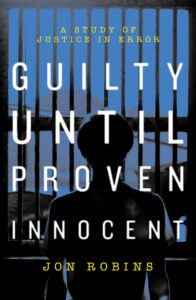
To read a powerful account of Eddie Gilfoyle's case and miscarriages of justice in Britain, read Jon Robins, Guilty Until Proven Innocent: The Crisis in Our Justice System
IN THE MEDIA:
Eddie Gilfoyle Campaign, Official Campaign Website
Channel 4, 'Accused: Beyond Reasonable Doubt', Episode 3: Eddie Gilfoyle's Case
Jon Robins, Book launch for Guilty Until Proven Innocent: The Crisis in Our Justice System
The Trump Report podcast (Dominic Kennedy), Eddie Gilfoyle: Miscarriage of justice or murderer?
The Daily Mail, 'A bizarre murder case... but could the jury have got this one wrong?'
The Liverpool Post, 'Peter Sullivan has been exonerated of murder. Will Eddie Gilfoyle be next?'
Legal Action Group, 'Eddie Gilfoyle - the case that won't go away'
The London Advocate, 'The controversial case of Eddie Gilfoyle: three decades of doubt'
Read More >>>

BBI Retreat 2026
Bound by Injustice (BBI) Retreat 2026 August Bank Holiday Retreat – A Weekend of Connection, Rest and Resilience Over the…

We’re Hiring – Barrister/Solicitor
We’re Hiring Barrister/Solicitor Barrister/Solicitor – £52,000 to £60,000 pa. APPEAL is legal charity that represents the wrongly convicted and campaigns…

Media Enquiries
Subscribe to Newsletter
Get Legal Help
Complaints Policy
Privacy and Cookie Policy
72-75 Red Lion Street (6th Floor)
London, WC1R 4NA
07735 434268
mail@appeal.org.uk
APPEAL is the working name of the Centre for Criminal Appeals, a Charitable Company Limited By Guarantee and a law practice authorised and regulated by the Solicitors Regulation Authority.
Registered Charity Number: 1144162 | SRA Authorisation Number: 621184 | Company Number: 07556168